Knee Care
Understand knee arthritis, non-surgical care, total and partial knee replacement, and selected sports knee care.
- 9 care pathways
- ~90% of primary replacements home the same day · practice data
- Clinically reviewed

The short answer
Knee care starts with the pattern of pain and loss of function, the parts of the knee involved, and what reasonable non-surgical care has accomplished. Replacement is one option, not the automatic result of an X-ray.
Knee Care pathways
Where each option fits.
Care starts with what the knee is causing, not a procedure. Depending on the diagnosis, the plan may be therapy, injections, arthroscopy for selected injuries, or partial, total, or revision replacement. These are the knee pathways, and where each fits.
Start with which compartments are involved.
The knee wears in three places, and the pattern shapes every option that follows: whole-joint resurfacing, a partial for one worn compartment, or care without surgery.
- Medial the inner compartment, the most common wear pattern
- Lateral the outer compartment
- Patellofemoral behind the kneecap
Interactive anatomy
Explore the knee without turning a picture into a diagnosis.
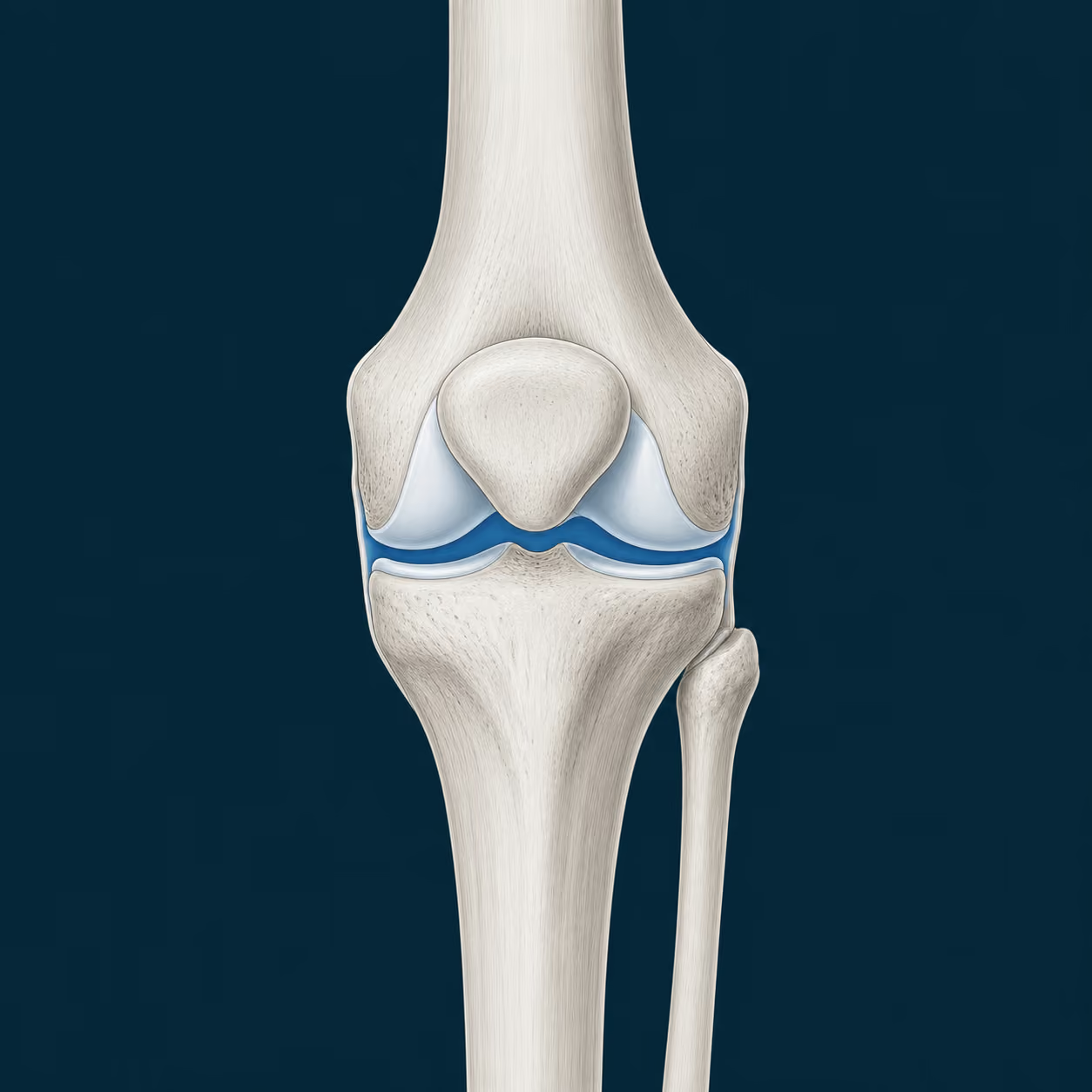
Use the named controls to compare a healthy and arthritic concept, then explore common symptom areas.
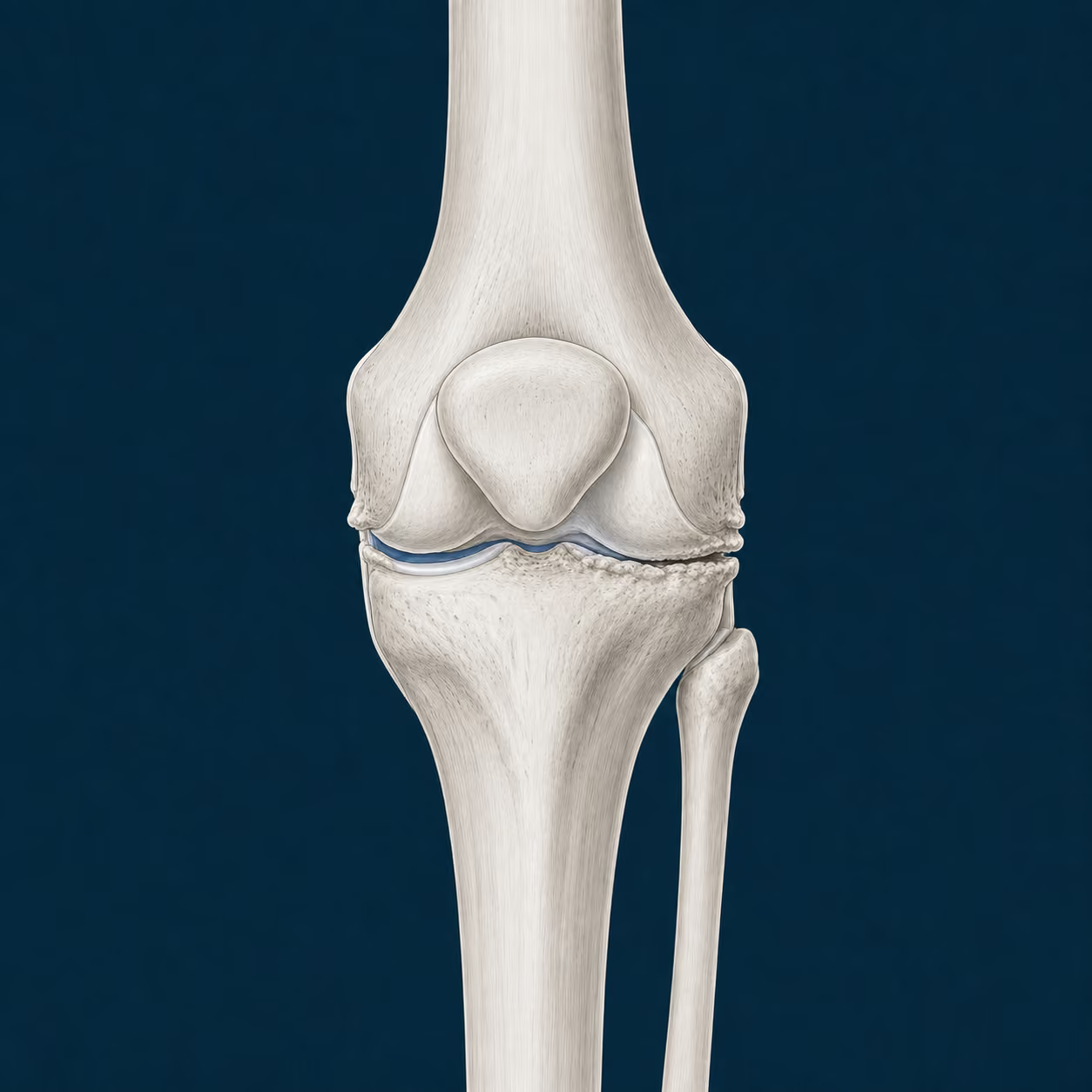
An educational illustration, not your joint: your care starts with an examination, not a picture.
Healthy joint concept
The illustration shows a smooth, visible joint space. A real evaluation depends on symptoms, examination, and appropriate imaging, not an illustration.
Explore symptom areas
Select an area to read why location can be useful context without becoming a self-diagnosis.
Pain location alone cannot diagnose the source.
Text equivalent
A healthy-joint concept shows smooth surfaces and a visible joint space. An arthritic-joint concept shows an irregular, narrowed space. These are simplified educational ideas, not a reading of your joint.
- Front of knee: Pain at the front, worst on stairs, when standing from a chair, or after long sitting, often involves the kneecap and the groove it rides in.
- Inside of knee: The inner compartment is where knee arthritis most often starts, and it is also home to the inner meniscus, so this is the most common place arthritis is felt.
- Outside of knee: Outer-side pain can come from the outer compartment or the soft tissue that runs across it, and which one it is changes the options, including whether a partial replacement fits.
- Back of knee: Aching or tightness behind the knee often travels with swelling inside the joint itself. New, one-sided calf swelling deserves a prompt call rather than watching.
Clarify the problem first
Knee pain can arise from arthritis, injury, inflammation, or pain referred from the hip or back, where the problem is somewhere else and the knee is where you feel it. History, examination, and appropriate imaging define which part of the knee is involved.
The knee is really three compartments: the inner side, the outer side, and the space behind the kneecap. Which of them the arthritis has reached is the knee’s distinguishing question, because it decides whether the options include a partial replacement or point toward a total one.
The decision to discuss replacement depends on function and goals as well as structural damage. Age, weight, and medical complexity affect risk, but they should begin a careful discussion rather than end it automatically.
Areas served
Knee replacement, one town at a time.
Choose your town for the practical version: how far the Noblesville clinic actually is, which route gets you there, and how many trips the operation costs.
NoblesvilleFishersWestfieldCarmelZionsvilleGreenwoodKokomoAndersonTiptonPendletonPeruLogansport
Use the consultation to make the decision clearer.
- Is arthritis the source of my symptoms?
- Could partial replacement fit?
- Of the things I have already tried, which ones deserve more time?
- What health factors can I improve?
Sources and further reading
- Total Knee ReplacementAmerican Academy of Orthopaedic Surgeons
- Total Knee ReplacementAmerican Association of Hip and Knee Surgeons