Total Knee Replacement
How the decision for total knee replacement is made, what the operation involves, and what a replaced knee can and cannot feel like.

The short answer
Total knee replacement resurfaces the damaged portions of the knee. It may be considered when arthritis creates meaningful pain or functional loss despite reasonable non-surgical care and the patient is ready to discuss the tradeoffs of surgery.
What the decision includes
The conversation brings together your symptoms, the examination, X-rays taken standing so the joint is under your weight, prior treatments, health risks, expectations, and the activities you want to regain.
The operation addresses the joint surfaces. Regaining motion and building useful strength require preparation, early mobility, and consistent work after the operation.
Technique follows the patient
How the knee is lined up, which implant is used, how the surgeon reaches the joint, how the parts are held in place, and whether you go home the same day are all decided for your knee, not by habit. No single tool replaces those decisions.
An artificial joint is also not the same as the knee you were born with, and the honest comparison, including what surgery risks and what it cannot restore, belongs in the consultation.
The risks, named plainly
Knee replacement is major surgery, and it carries real risks even when everything is done well: infection, blood clots, stiffness that limits how far the knee bends, injury to nerves or vessels, fracture around the implant, pain that persists despite a well-positioned implant, and the possibility that wear or loosening leads to revision surgery years later. Serious complications are uncommon, but none of them is zero, and how each applies to you belongs in the consultation. The American Academy of Orthopaedic Surgeons patient guide, linked in the sources below, covers each of them in more depth.
Surgery is also not the only option on the table. Quadriceps and hip strengthening, physical therapy, activity changes, weight management where it applies, anti-inflammatory medication, bracing, and selected injections remain real choices, and they still help some people even with advanced arthritis.
There is one more thing worth hearing before you decide. A minority of patients remain dissatisfied after a knee replacement that was technically well done. That is a documented reality of this operation rather than something surgeons keep quiet, and it is why Dr. Patel does not recommend surgery until non-surgical options have had a fair chance and your own goals make the trade worthwhile. If you are not there yet, he will say so.
Two ways surgeons think about lining up the knee
A knee replacement has to be positioned so the leg carries weight evenly and the joint feels balanced through its range of motion. One long-established philosophy, often called mechanical alignment, aims for a neutral, even weight line through the leg, which is the approach most of the long-term outcome data was built on. A newer philosophy, kinematic alignment, aims to restore the particular alignment your knee had before arthritis set in.
Both approaches are studied and both can work well, and no single method has been shown to be right for everyone. What matters is that the surgeon has a clear reason for the plan they choose in your case, based on your anatomy, your ligaments, and how your knee moves. This is a good thing to ask about directly rather than something to decide from a brochure.
What a new knee can and cannot feel like
Knee replacement is usually effective at relieving the deep, activity-limiting pain of arthritis and at restoring walking, stairs, and sleep; the degree of improvement varies from person to person. That change is what most people notice and value most, and it is an honest goal to hold onto.
At the same time, a replaced knee is not identical to the knee you were born with. Some people are aware of the joint, notice occasional clicking, feel a patch of numbness beside the scar, or find kneeling uncomfortable, and these experiences are common and usually not signs of a problem. Knowing this in advance tends to make recovery feel like progress rather than a surprise.
The implant, shown plainly.
Three parts resurface the joint. The muscle around the knee stays yours; which ligaments are kept depends on the implant chosen for you, and is worth asking about.
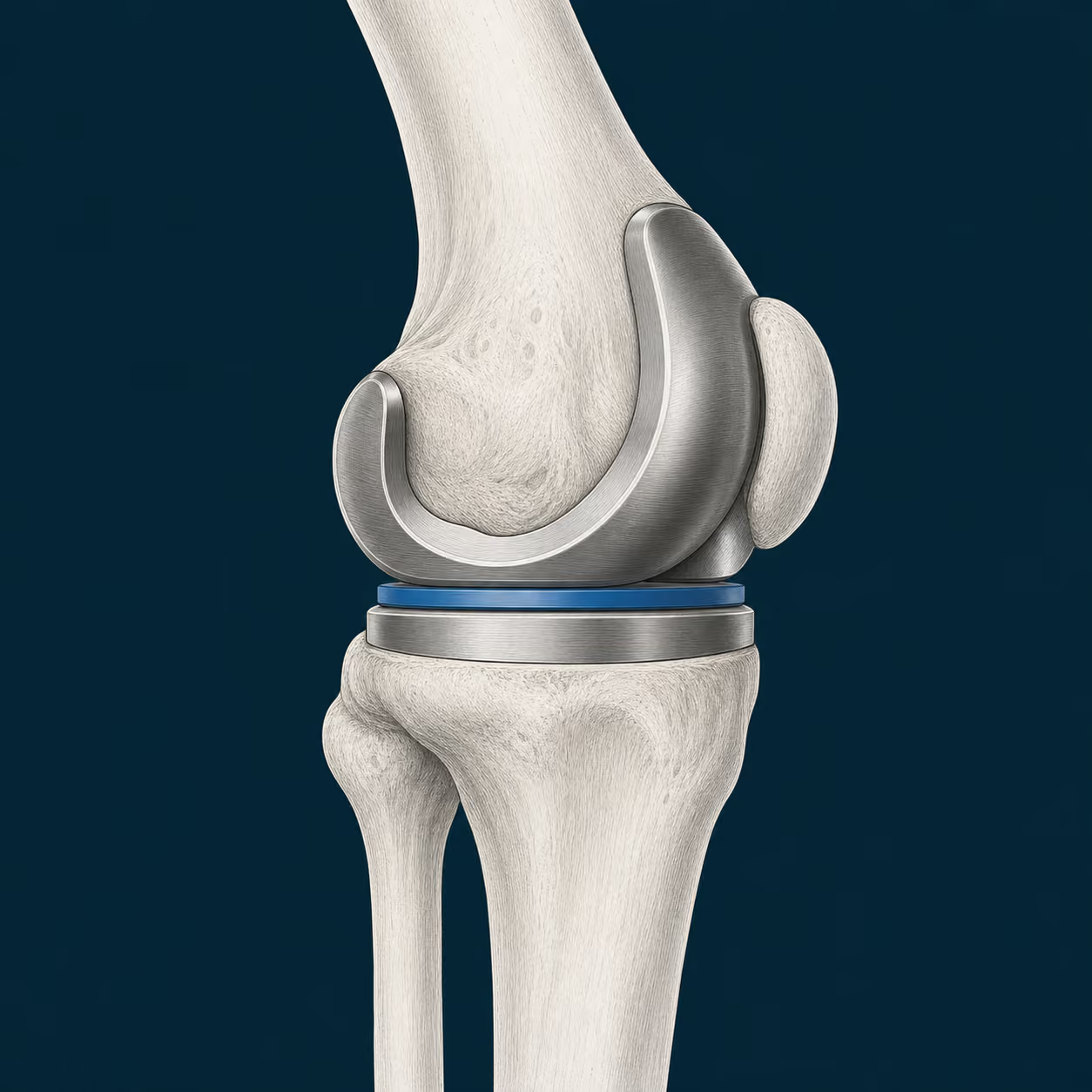
- Femoral component caps the worn end of the thigh bone
- Bearing insert is the new smooth surface between the parts
- Tibial tray anchors the insert on the shin bone
How knee replacement works
This one-minute patient-education animation from Stryker shows how the worn surfaces of the knee are resurfaced and replaced. It is a general illustration, not a recording of any specific operation; the safety information at the end is Stryker’s.
What the new knee looks like in the leg
A total knee replacement resurfaces the worn ends of the thigh bone and shin bone and adds a smooth bearing between them, so the joint glides instead of grinding. This medical illustration shows how the components sit within the whole leg.
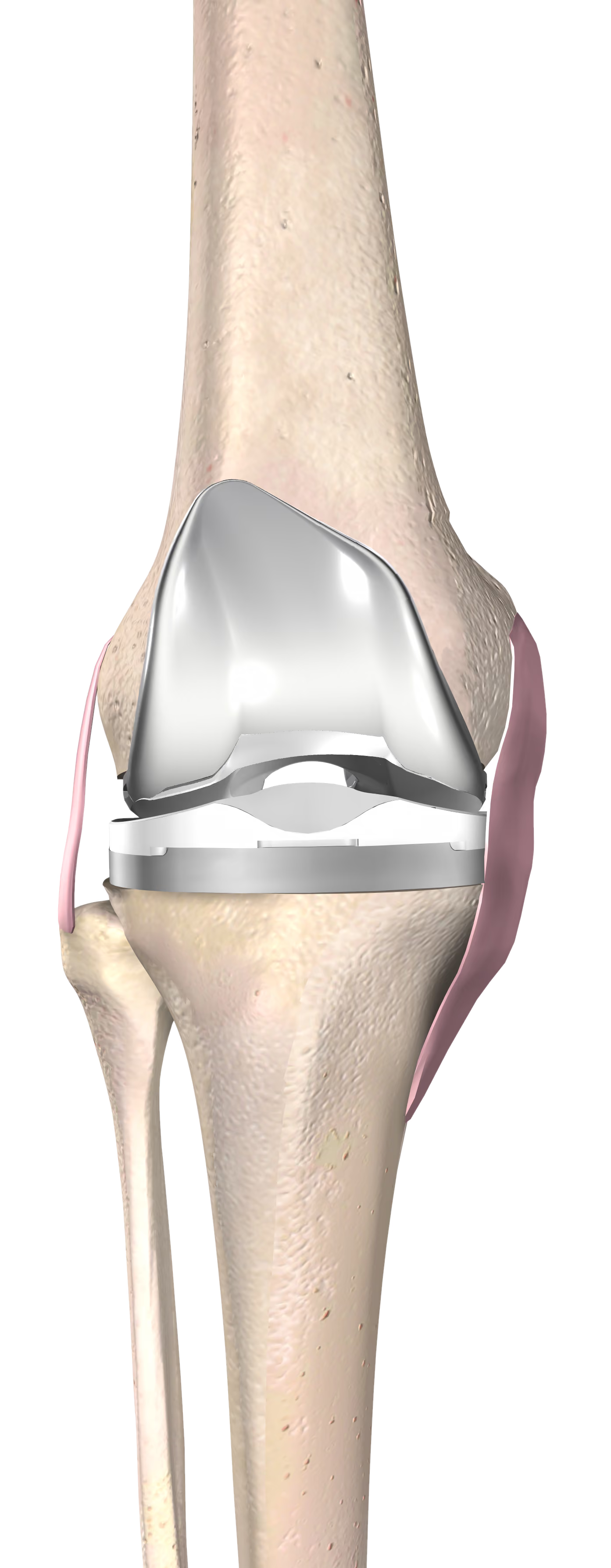
A visual walk through knee replacement
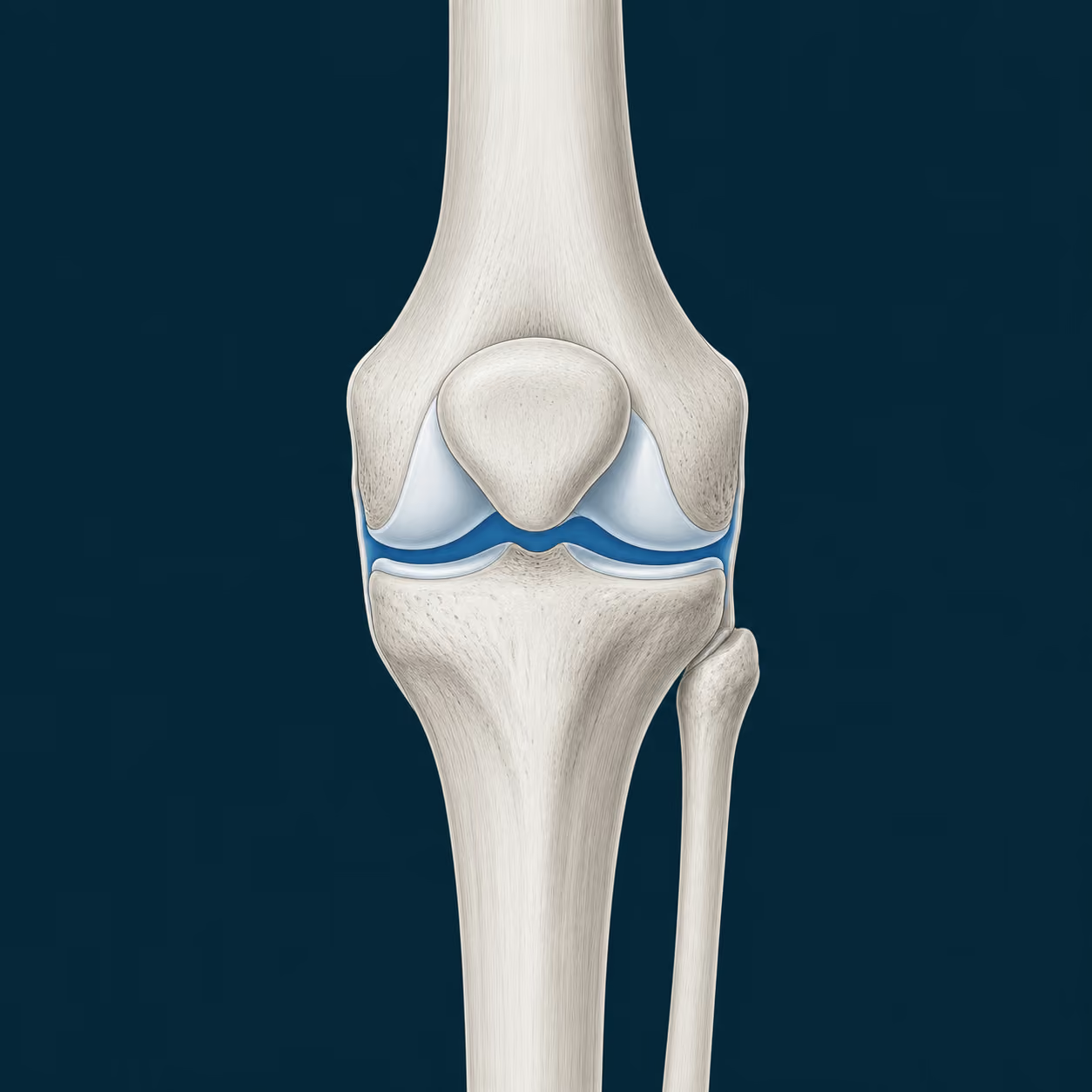
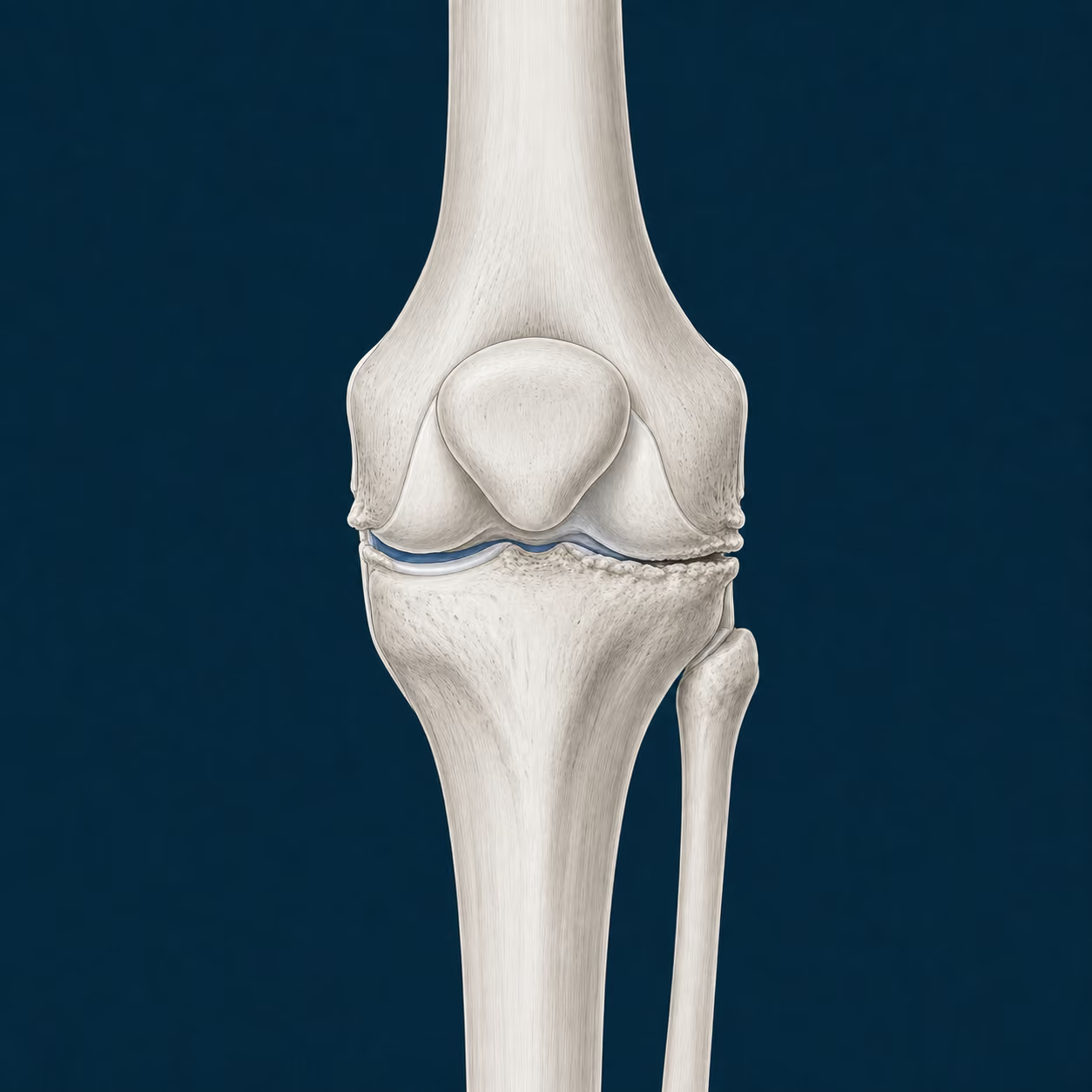
Open the animated walkthrough
General patient-education animation. It explains the topic in broad terms and is not medical advice or a description of your specific plan; bring your questions to a consultation.
Use the consultation to make the decision clearer.
- How do I know when I am ready?
- What would make surgery too early, or too risky, for me?
- Is partial replacement an option?
- Would outpatient care fit?
- What does strength work look like afterward?
- Which alignment philosophy would you use for my knee, and what about my case leads you there?
- Given my anatomy, what parts of my knee will feel natural afterward and what should I expect to feel different?
- How does the way I move now affect how you will balance the new knee?
Sources and further reading
- Total Knee ReplacementAmerican Academy of Orthopaedic Surgeons
- Total Knee ReplacementAmerican Association of Hip and Knee Surgeons