Knee Arthritis
What knee osteoarthritis is, the non-surgical options worth trying, and how the compartments involved shape the choices, including partial replacement.

The short answer
Knee arthritis is the wearing of the cartilage that cushions the knee, in one compartment or several. It can cause pain, swelling, stiffness, and a sense of giving way. Non-surgical care comes first; replacement, partial or total, becomes a conversation when meaningful loss persists despite that care.
Why "bone-on-bone" is a description, not a verdict
“Bone-on-bone” is a description of an X-ray showing advanced osteoarthritis, with little joint space left. An X-ray can show severe narrowing while the person copes well, or moderate narrowing while life has shrunk badly. The image describes the joint; it does not decide the treatment.
Which compartments are involved also matters; the knee has three, the inner side, the outer side, and the space behind the kneecap. Arthritis confined to one compartment raises different options, including partial replacement for selected knees, than disease across the whole joint.
What can help before any operation
Reasonable non-surgical care can include quadriceps and hip strengthening, physical therapy, activity modification, weight management where it applies, appropriate anti-inflammatory medication, bracing in selected patterns, and injections. Injections are usually cortisone, which can calm a flare for weeks to a few months, or hyaluronic acid in selected knees; neither rebuilds cartilage, and how long relief lasts varies widely.
When a genuine plan of non-surgical care no longer holds the line, the next step is a candid conversation about what surgery can and cannot restore for your specific knee, not an automatic operation.
Braces and walking aids, used on purpose
A few simple tools can take load off an arthritic knee. A snug sleeve adds warmth and a better sense of where the joint is, while a more specialized unloader brace is designed to shift weight away from the worn side of the knee and can help selected people stay active with less pain.
A cane is often misunderstood. Used in the hand opposite the sore knee, it can meaningfully reduce the force traveling through that joint with each step. Reaching for one of these aids is a way to keep moving, not an admission of defeat, and it can be a temporary bridge rather than a permanent fixture.
How weight and load work, without the guilt
With every step, and especially on stairs, the knee carries far more than your body weight alone, because muscles and leverage multiply the load the joint actually feels. That multiplying effect is simply how the mechanics of the knee work, and it is the reason a change in body weight is felt at the knee more than the scale suggests.
This is meant as information, not judgment. Weight is one lever among several, and it sits alongside strengthening the muscles around the knee, choosing lower-impact activity, and the other steps above. Even modest, gradual change can lighten the daily load on an arthritic knee, and it is one part of a plan you do not have to sort out alone.
When to call rather than wait
A few situations deserve prompt evaluation instead of steady patience: a knee that suddenly cannot bear weight, a hot or swollen joint with fever or chills, locking that will not release, or a sharp change after a fall. Call the office about those rather than watching the trend. Emergency symptoms should be handled as emergencies.
Arthritis can strike one compartment, or all three.
The knee has three compartments, and which ones are worn is what separates a partial replacement conversation from a total one. This short animation shows the three compartments and where osteoarthritis takes hold.
What arthritis does to the joint space.
On an X-ray, healthy cartilage shows up as open space between the bones. As arthritis wears that cartilage away, the space can narrow until bone meets bone. Seeing the comparison is often the moment the diagnosis makes sense. Still, the image describes the joint; it does not decide the treatment.
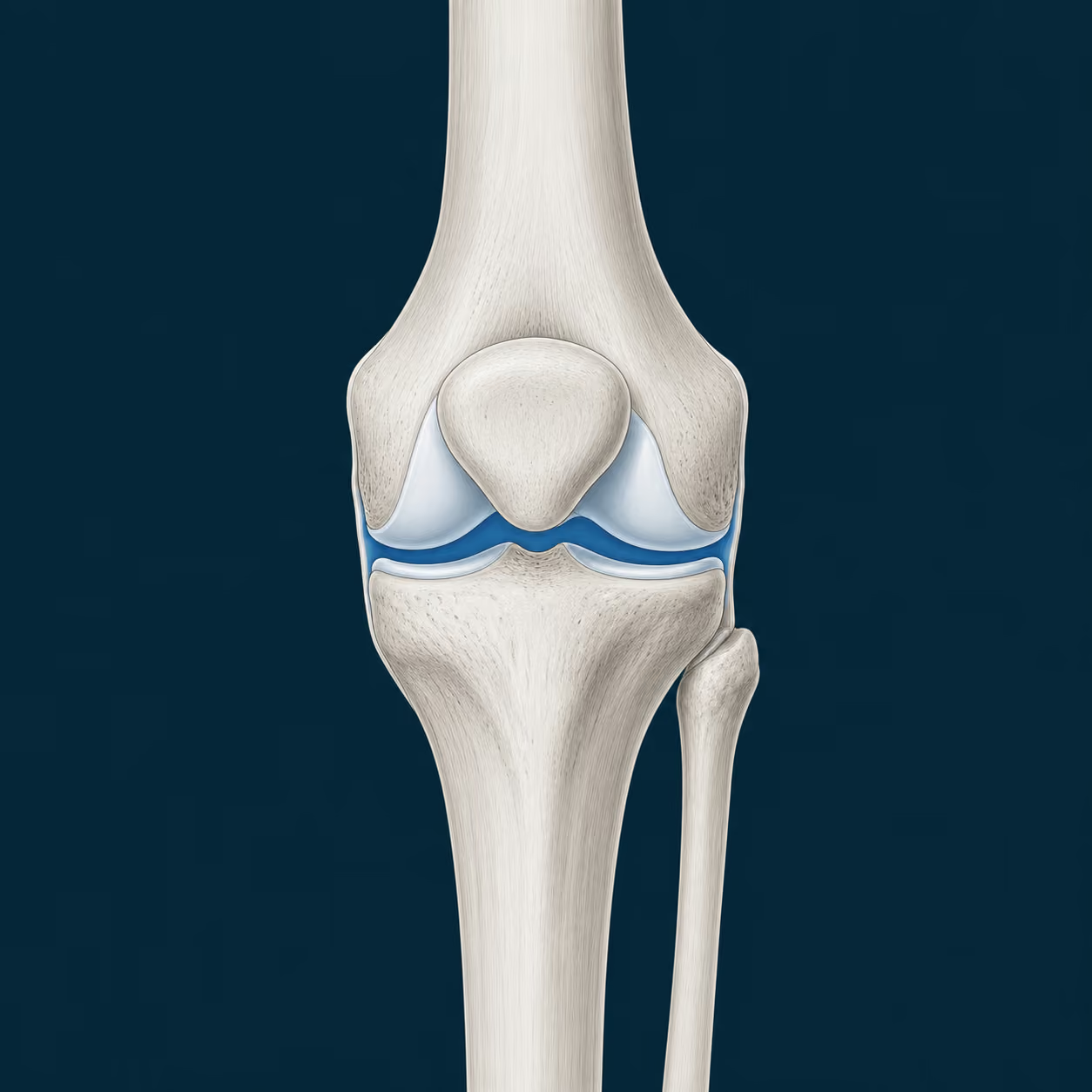
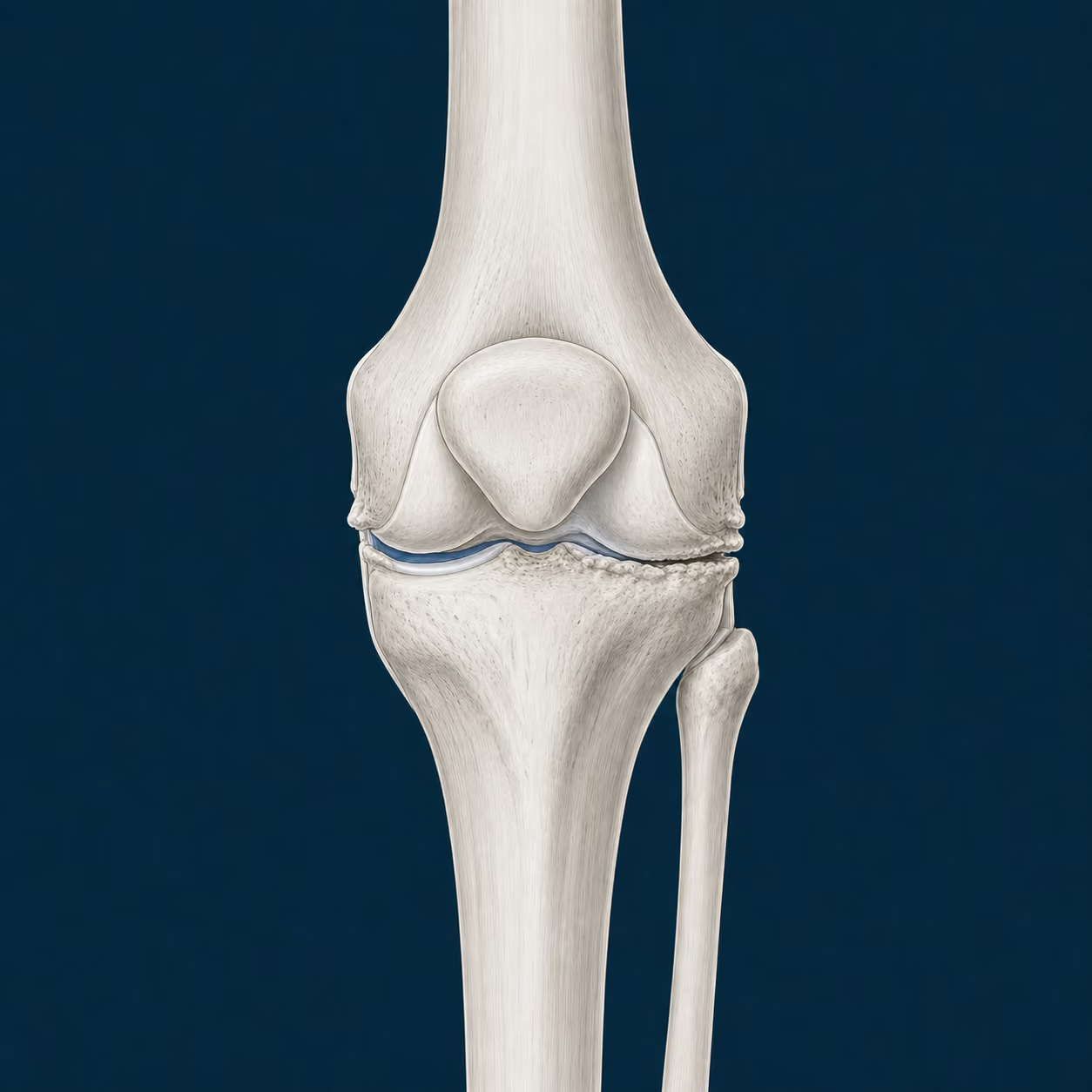
These are educational illustrations, not X-rays of a real person. Your own imaging, and how it matches your symptoms, is what gets read in a consultation.
Where knee pain comes from
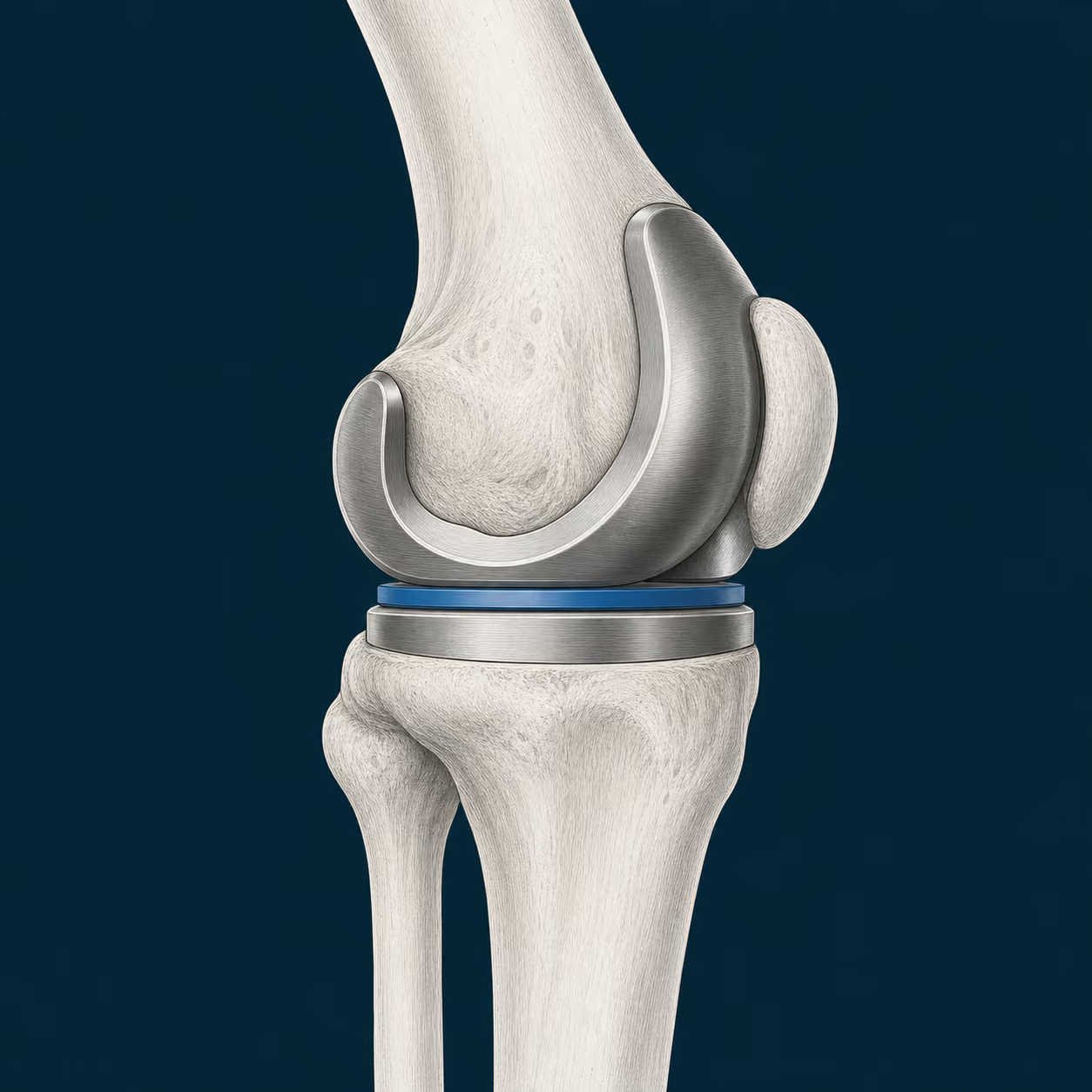
Open the animated walkthrough
General patient-education animation. It explains the topic in broad terms and is not medical advice or a description of your specific plan; bring your questions to a consultation.
Use the consultation to make the decision clearer.
- Which compartments of my knee are involved?
- Could a partial replacement fit my pattern of disease?
- Is the activity I most want back realistic without surgery?
- Would an unloader brace suit the pattern of arthritis in my knee?
- Which strengthening exercises would most reduce the load on my knee?
- What non-surgical steps would you want me to try before we discuss replacement?
Sources and further reading
- Arthritis of the KneeAmerican Academy of Orthopaedic Surgeons
- Total Knee ReplacementAmerican Academy of Orthopaedic Surgeons
- Total Knee ReplacementAmerican Association of Hip and Knee Surgeons