Patellar Tendon Repair
A torn patellar tendon is one of the few knee injuries where timing matters. What the injury is, how it is repaired, and what recovery asks of you.
The short answer
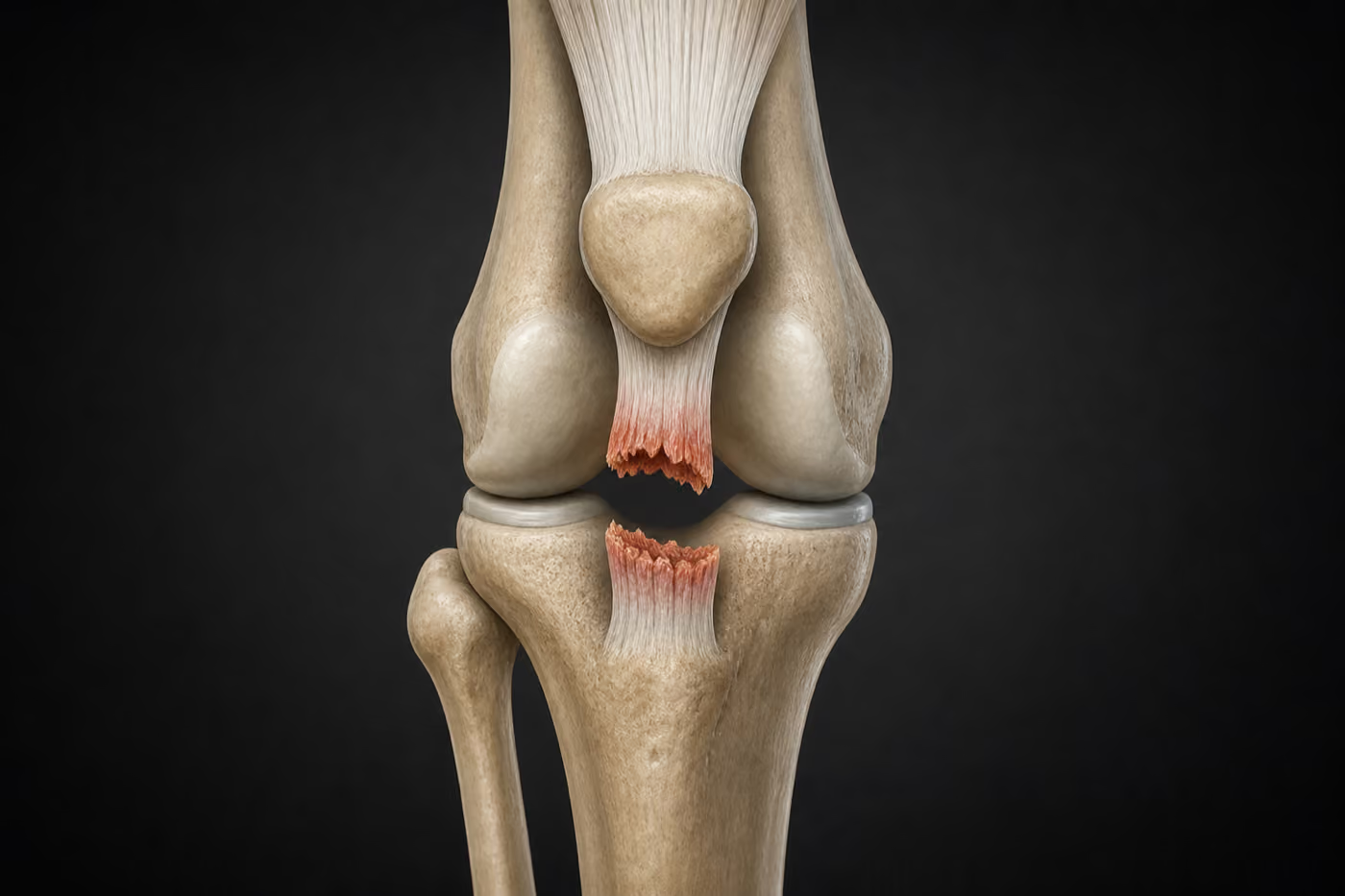
The patellar tendon connects the kneecap to the shinbone and carries the force that straightens your leg. A complete tear separates that connection, and the knee can no longer hold you up. Unlike most knee problems, this one is usually repaired soon after it happens rather than watched.
How it happens, and what it feels like
A patellar tendon tear usually happens in one moment: landing awkwardly, a fall, or a sudden forceful straightening of a bent knee. People often describe a pop, immediate swelling, and being unable to keep the knee straight against gravity.
The kneecap may sit higher than usual, because nothing is anchoring it downward any more. Being unable to straighten the knee or to hold it straight is the finding that separates this from an ordinary knee injury.
Why timing matters here
Most of what this practice treats can wait while you think. A complete patellar tendon rupture is the exception. Tendon ends retract over time and the tissue changes, so a repair done soon after the injury is usually more straightforward than one done months later.
If you cannot straighten your knee after an injury, that is a reason to be seen promptly rather than to wait and watch. Partial tears with an intact straightening mechanism are a different situation, and some of those are treated without surgery.
What the repair involves
The operation reattaches the torn tendon to the kneecap, usually with strong sutures passed through bone tunnels or anchored into the bone. The goal is to restore the connection that lets the quadriceps straighten the leg.
Recovery is deliberate. The knee is protected in a brace at first, with a planned schedule for how much motion and weight the repair can take as it heals. Rebuilding quadriceps strength takes months of real work, and that work, not the operation alone, is what determines how the knee ends up.
Risks, and an honest note on outcome
The named risks include infection, blood clots, stiffness, weakness that does not fully resolve, and the possibility that the repair itself fails and needs another operation. Some people regain full strength and some do not, and no repair can promise which group you land in.
A published account from Dr. Patel’s Ohio years describes a firefighter, Jeremy Stiver, who ruptured his patellar tendon and returned to full firefighting duty about five months after the repair. His story, as reported by the Adena Health System newsroom, is on the patient stories page. It is one patient’s outcome, not a typical timeline, and it should be read that way.
Common questions
How urgent is a patellar tendon repair?
A complete tear is generally repaired within the first few weeks, and sooner is usually simpler. The tendon ends pull apart over time, which makes a later repair more involved. If you cannot straighten your knee after an injury, be seen promptly.
Can a torn patellar tendon heal without surgery?
A partial tear with an intact straightening mechanism sometimes can, with bracing and therapy. A complete tear generally cannot, because the two ends are no longer connected and nothing holds them together while they heal.
How long is recovery after a patellar tendon repair?
Protection and a staged return of motion take the first several weeks, and rebuilding quadriceps strength takes months beyond that. Return to demanding physical work is measured in months, not weeks, and the timeline is individual.
Use the consultation to make the decision clearer.
- Is my tear complete or partial?
- Can I straighten my knee against gravity right now?
- How soon should this be repaired?
- What does the bracing and weight-bearing schedule look like week by week?
- What strength should I realistically expect at six months and at a year?
Sources and further reading
- Patellar Tendon TearAmerican Academy of Orthopaedic Surgeons