Bikini-Incision Anterior Hip Replacement
How the bikini-incision variant of anterior hip replacement differs, who it suits, what scar expectations are realistic, and when a standard incision is the better choice.

The short answer
A bikini-incision anterior hip replacement changes the orientation and location of the skin incision while using an anterior surgical approach. Its main intended distinction is cosmetic, and it is appropriate only when anatomy and the operation make it reasonable.
What is different
The skin incision follows a more natural crease near the front of the hip. The deeper operation remains a hip replacement and still requires the same attention to exposure, implant placement, tissue handling, and safety.
The incision should never limit the surgeon’s ability to perform the operation well. A conventional incision may be recommended when exposure or anatomy requires it.
Who may ask about it
Patients who are considering an anterior approach and place a high value on incision location may ask whether this option fits. Candidacy varies, and a request does not guarantee that the incision is advisable.
Appearance belongs in the conversation, but in proportion to the larger goals and risks of joint replacement.
Why the incision sits where it does
A standard anterior incision runs lengthwise down the front of the thigh, roughly in line with the leg. The bikini variant places a shorter incision lower and more horizontally, angled to follow the natural groin crease, so the resulting scar tends to sit within a skin fold rather than across it.
The reasoning is not only cosmetic. Skin heals differently depending on how the incision sits relative to the directions the skin naturally stretches, and a line that follows a crease is under less repeated stretch as the hip bends. That said, scar quality depends heavily on individual healing, and no incision plan can promise a particular appearance.
When a standard incision is the better choice
The bikini incision offers the surgeon a narrower working window. More soft tissue at the front of the hip, a very muscular build, unusual bone shape, prior surgery or hardware, or a hip that will need extensive work can all make that window too tight to operate safely through. In those situations a standard anterior incision, or a different approach entirely, is the right call.
A skin fold that sits directly over a low, horizontal incision can also stay moist and be slower to heal for some patients, which is part of the selection conversation rather than an afterthought. The decision is made with your imaging and your body in front of the surgeon, and the plan can change during surgery if exposure requires it.
Two paths to the same joint.
Two of the ways surgeons reach the hip; the route differs, the joint is the same. The choice follows your anatomy and the plan.
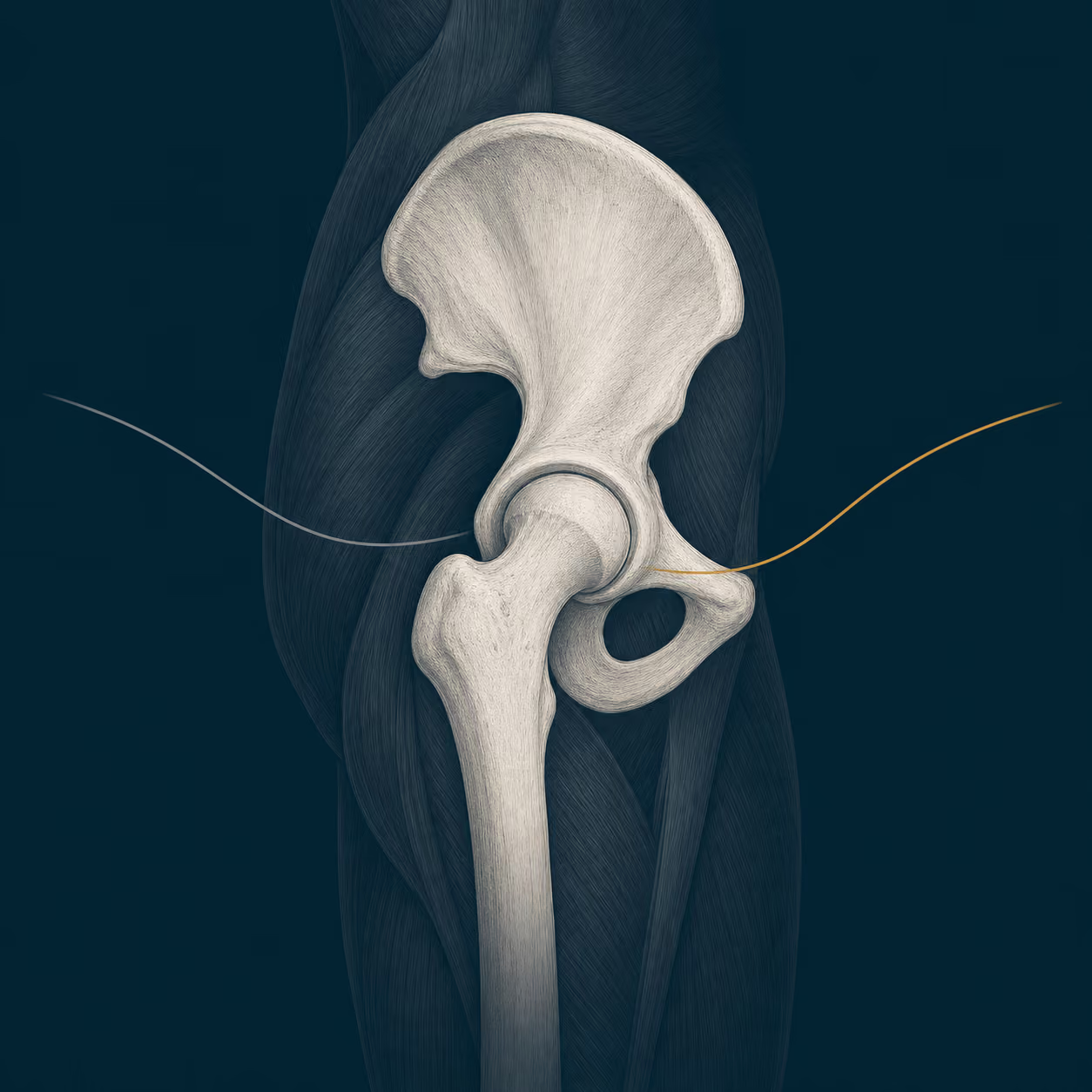
- Anterior arrives from the front, along a natural seam between muscles
- Posterior arrives from the back, through muscle that is repaired at closure
Use the consultation to make the decision clearer.
- Is the difference primarily cosmetic?
- Could the incision plan change?
- Does body habitus affect candidacy?
- What scar expectations are realistic?
- Looking at my imaging and build, is the bikini incision a safe window for my operation?
- If you started with this incision and needed more exposure, what would you do?
- How does the scar typically look at six months, and what affects that most?
Sources and further reading
- Total Hip ReplacementAmerican Academy of Orthopaedic Surgeons
- Total Hip ReplacementAmerican Association of Hip and Knee Surgeons